Originality- something that creatives struggle with. Hence, previous works are constantly being drawn by creators to serve as inspiration, to create a new and improved work. However, there is a thin line between taking inspiration and blatantly copying, which is where the term appropriation can be applied. Appropriation is defined as ‘the deliberate re-working of images and styles from well-known works of art for ones own use.’ A phenomenon that has become extremely apparent within the Fashion Industry is that appropriation of design. Due to the fact that fashion is re-inventing style and creating new designs, appropriation in fashion has always raised opinions.
Brands use a patent or trademark for a design that they have established, in order for it to remain their own. That design will then become an intellectual property, which refers to intangible creations of the mind- artistic works, symbols, names, industrial designs etc. If another brand is seen copying designs, legal action can be taken by the original brand.
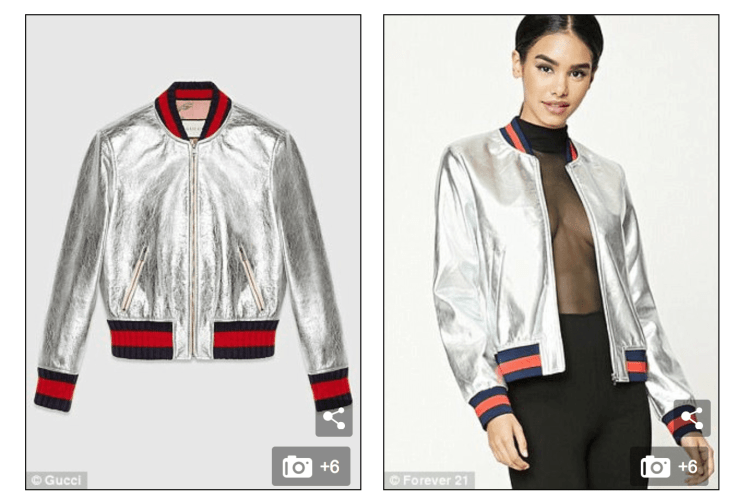
Some prominent examples of appropriation in the fashion industry are when luxury fashion label Gucci filed a law suit against Forever 21 for copying various designs. Gucci claimed that the fast fashion brand did not only copy their iconic stripes but are also selling items of clothing with almost identical designs for 97% cheaper than the original designer piece.
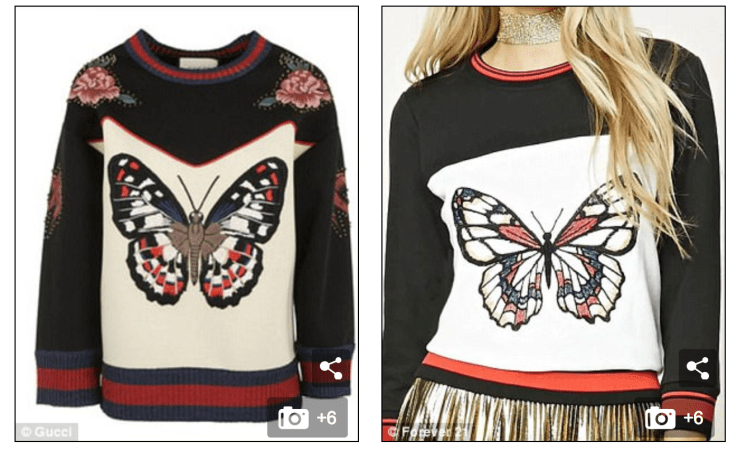
In addition, Forever 21 began selling sweaters with a butterfly graphic on the front, that was near-identical to the popular Gucci Butterfly sweater that had been sold out.
The luxury fashion brand had began sending letters to Forever 21 in December of 2016, insisting the brand cease and remove all items possessing using their designs, including pants that utilised their blue and red stripe design.
In an interview conducted by CBS, Gucci had said that ‘this was a step to finally put an end to Forever 21’s ‘blatant exploitation’. This is because this was not the first time that Forever 21 was caught copying designs from other brands such as Puma and Adidas. However, in defence, Forever 21 put out a statement claiming that ‘clothes with this same, common stripe design have been sold for many years, by many different brands and remain widely available today.’
Another incident that has been under the spotlight was Zara allegedly copying designers from an independent designer that goes by the name Tuesday Bassen. Bassen had took to Instagram and Twitter to expose the high-street fashion brand, saying ‘The sheer volume of @zara’s intellectual property theft this year is stunning. This is not a coincidence. This is a blatant disregard for copyright law and the original work of independent artists worldwide.”
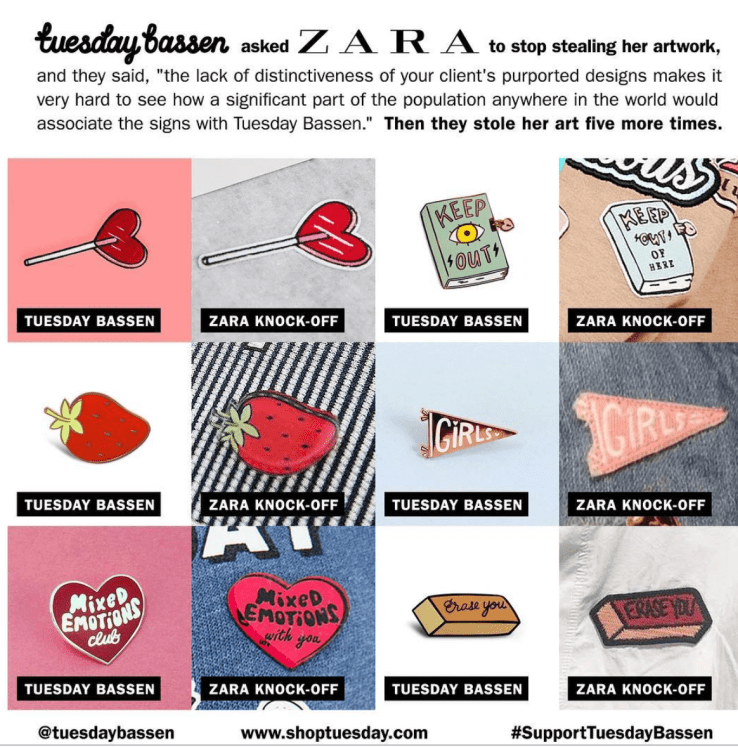
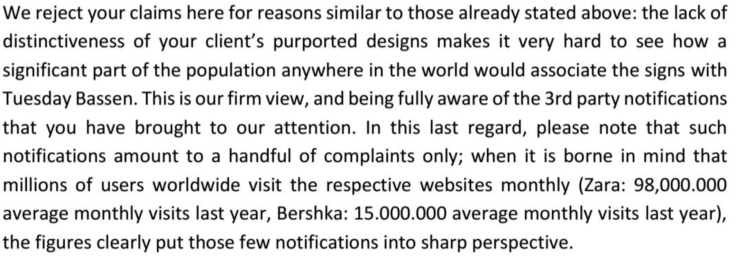
As seen from the image above, individual pin designs by Bassen have been either copied directly or manipulated slightly and placed onto Zara’s clothing items, and claimed to be their own. Bassen had demanded the brand to pay her the full price if they were going to continue selling her designs, and Zara responded saying that her designs were ‘too simple and common’. After requesting to press charges against the fashion label, Zara’s legal team responded with the passage below:
To conclude, exploiting designs that are blatantly copied and profiting off them, whether they be indie designers or big corporate brands is unethical. However, with brands like H&M, Forever 21 and Zara being fast fashion brands, consumers obliviously continue to purchase from them due to their extremely affordable prices, so I strongly believe that more light should be shed on issues like this so that more become aware of the sheer theft that these brands commit.
References
Mail Online. (2017). Forever 21 lands in hot water after Gucci sues for ripping off designs. [online] Available at: https://www.dailymail.co.uk/femail/article-4779144/Gucci-sues-Forever-21-ripping-trademark-stripes.html [Accessed 28 Nov. 2018].
Schlossberg, M. (2016). The top retailer in the world has a dirty little secret — and it’s spiraling out of control. [online] Business Insider. Available at: http://uk.businessinsider.com/zara-accused-of-copying-artists-and-designers-2016-7 [Accessed 28 Nov. 2018].

 shanae.video.blog